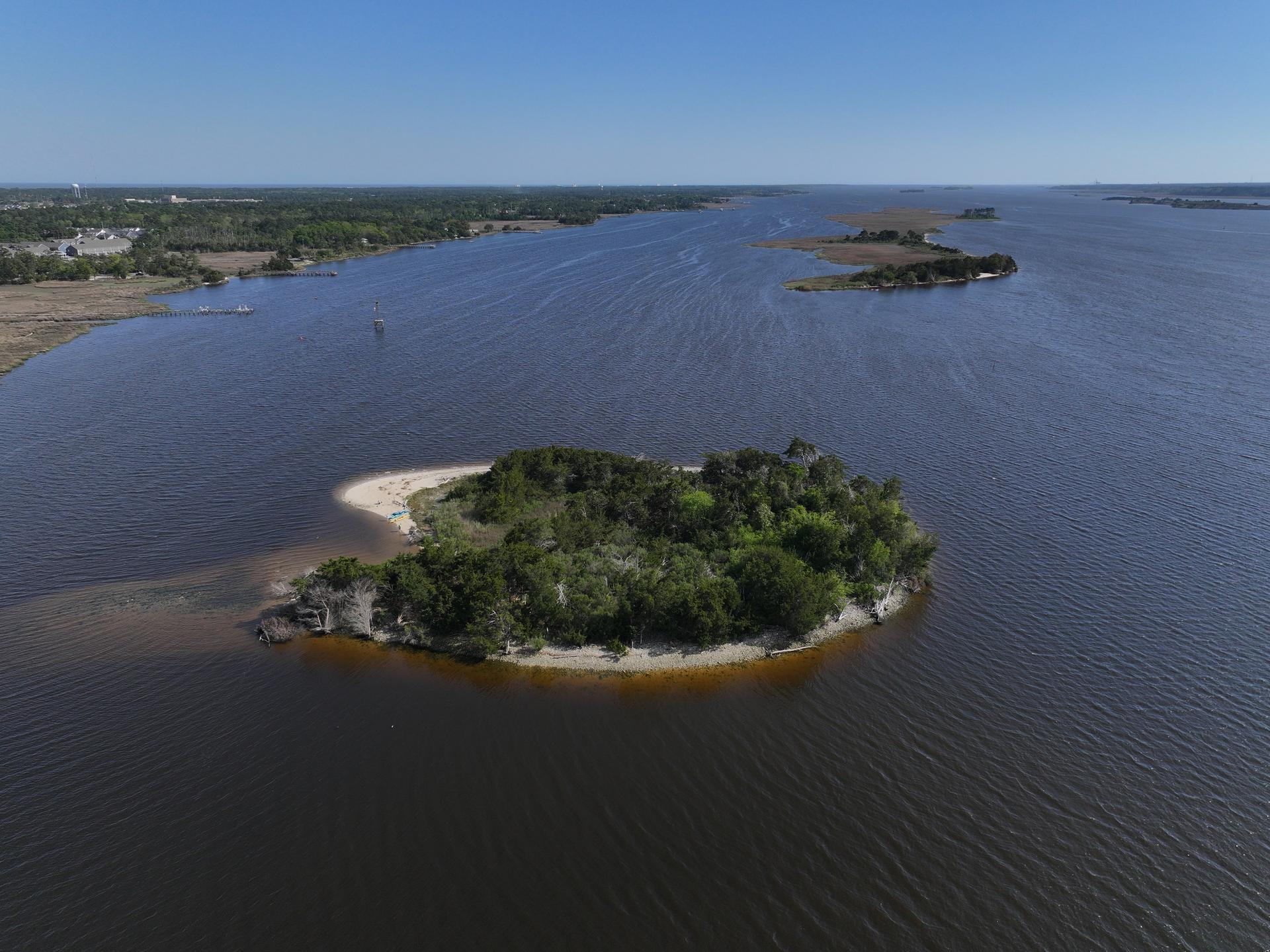
The fossils are ancient. The island itself tells a newer story — shaped by dredging, navigation, and the working history of the Cape Fear River.
SharkToothIsland.org·Cape Fear River, NC
Most people come to Shark Tooth Island for one reason: fossils.
That makes sense. The place has earned its reputation. But the full story is stranger, and honestly more interesting, than a simple fossil-hunting destination.
The fossils are ancient. The island, at least in the form people know it today, is not.
Shark Tooth Island sits in a part of the lower Cape Fear River shaped by navigation, dredging, and the long effort to keep Wilmington connected to maritime commerce. Early dredging in the lower Cape Fear began in 1871 under the U.S. Army Corps of Engineers to maintain a reliable 12-foot channel for river traffic, and later projects deepened the harbor and approach channels further as shipping needs changed.
That matters, because Shark Tooth Island is generally understood as part of a chain of spoil islands created from sediment removed from the Cape Fear River channel. In plain English: material was dredged out of the river so ships could move through it more easily, and some of that material was placed nearby, helping form the island landscape people explore today.
The fossils are ancient. The island is newer.
Shark Tooth Island tells two stories at once — one measured in millions of years, the other in the century-and-a-half history of Cape Fear River navigation.
That is what makes the site so unusual. Shark Tooth Island tells two stories at once.
One story is deep time. The fossils being found there come from much older sediments — a mix that includes Eocene Castle Hayne limestone (roughly 35–40 million years old) along with younger Miocene and Pliocene marine material that produces most of the shark teeth and marine remains.
The other story is human time. The island is part of a working-river history shaped by engineering, commerce, and the maintenance of a shipping corridor that served Wilmington and the lower Cape Fear. The fossils may be millions of years old, but the island itself belongs to a much newer chapter in coastal North Carolina history.
The Fossils Are Ancient. The Island Is Not.
One of the easiest ways to misunderstand Shark Tooth Island is to assume the island itself is some ancient fossil beach that has always existed in its current form.
That is not really the story.
The teeth are old. The shells and sediments can be old. But the island as people know it today is tied to a much more recent chapter in the history of the Cape Fear River.
You are standing in a landscape shaped by modern dredging while searching for remnants of an ocean that disappeared millions of years ago.
That contrast is part of what makes the place so compelling.
photo_library
Archival image forthcoming
Fig. 1 — Historical view of the lower Cape Fear River channel and dredge spoil areas. Photo credit and date to be confirmed.
Why the Cape Fear Was Dredged
The lower Cape Fear River has long mattered as a route for commerce and shipping. Keeping a navigable channel open was essential for moving goods and supporting the Port of Wilmington.
As ships changed and draft requirements increased, the river and harbor needed repeated dredging and maintenance. That work was practical and economic in purpose. It was about access, depth, and keeping the river useful as a working transportation corridor.
Shark Tooth Island exists in the wake of that effort.
Key Moments
1871
U.S. Army Corps of Engineers begins dredging the lower Cape Fear to a 12-foot channel, improving reliability for river traffic and commerce.
Late 1800s – Mid 1900s
Repeated channel deepening and maintenance as shipping demands evolve. Dredged material placed in nearby disposal areas, contributing to spoil island formation.
Mid–Late 1900s
Former spoil sites stabilize, develop vegetation, and begin functioning as wildlife habitat and estuarine features.
Today
Shark Tooth Island is known as a fossil-hunting destination, a tidal habitat, and one of the most productive publicly accessible sites for Miocene and Pliocene shark teeth in the Cape Fear region.
How Spoil Islands Were Formed
When material is dredged from a channel, it has to go somewhere.
In the lower Cape Fear, dredged sediments were placed in nearby areas, contributing to the creation of spoil islands and reshaped shoreline features. Shark Tooth Island is widely understood as part of that broader spoil-island story.
This is the key to understanding the island: it is not just a natural destination. It is also a landscape created by human decisions about navigation, industry, and the river itself.
map
Archival image forthcoming
Fig. 2 — Navigation chart or aerial survey of the Cape Fear River showing dredge disposal areas and spoil island chain. Source to be confirmed.
Why Fossils Show Up Here
This history helps explain why Shark Tooth Island became such a productive place to look for fossils.
The island is associated with dredged and reworked material, which means older fossil-bearing sediments were brought up, moved, and deposited in a way that concentrated finds in a publicly accessible shoreline environment.
The hunt is real, but the setting behind it is unusual. Shark Tooth Island is part fossil site, part engineered accident, part tidal sorting machine.
That is also why a visit there feels different from casually walking an ordinary beach. The island rewards patience, low tide timing, and a willingness to search shell beds, darker material, and the little pockets where things gather.
construction
Archival image forthcoming
Fig. 3 — Dredging operation on the Cape Fear River. Historical photo to be sourced.
From Industrial Byproduct to Habitat
The story does not end with dredging.
Former spoil islands in the lower Cape Fear now function as habitat too, including important areas for seabirds and estuarine life. Places once shaped by industrial necessity have become part of the living coastal system.
That adds another layer to Shark Tooth Island. It is not only a fossil destination or a dredging artifact. It is also part of a working estuary still changing in real time.
Why This History Matters
Understanding how Shark Tooth Island formed changes the whole way you see the trip.
It explains why fossils show up there.
It explains why access is by water.
It explains why the island feels dynamic instead of fixed.
And it reminds you that this is not a theme park made of shark teeth. It is a byproduct of a real working river with a long industrial and environmental history.
That, to us, makes the island even better.
Shark Tooth Island is a fossil site. It is also a navigation story. A coastal engineering story. A habitat story. And if this project does its job well, it becomes one of the most complete public-facing resources on all of the above.
STI
SharkToothIsland.org
A Mozy Outdoors field project · Cape Fear Region, NC