The Field
Guide.
The complete resource for visiting Shark Tooth Island. Evergreen guides on access, identification, ethics, and history — plus live tidal conditions and a full species catalog. Built from field notes and updated as the site grows.
Station Coordinates
34.1175° N
77.9306° W
New Hanover County, NC
The Core Resources.
Stable, deep reference pages. Each one is written to be the most useful public resource on its topic.
How to Visit
Access, what to bring, how to search, and how to leave it right. The complete practical trip-planning guide.
Read Guide arrow_forwardHow Shark Tooth Island Was Made
The fossils are ancient. The island is newer. Dredging, navigation, and the Cape Fear River's working history.
Read Story arrow_forwardFree Field Guide Download
A 15-page illustrated expedition logbook. Launch info, tide timing, hunting technique, and stewardship in one PDF.
Get the PDF arrow_forwardWhat Is Shark Tooth Island?
A plain-English overview of the island, its location, and why it matters. Good starting point for first-timers.
Read Guide arrow_forwardHow to Find Shark Teeth
Technique, timing, and shoreline reading. What beginners miss and what experienced hunters look for.
Read Guide arrow_forwardFossil vs. Shell
How to tell real fossil material from beach shell at a glance. Weight, color, texture, and visual cues.
Read Guide arrow_forwardShark Tooth Anatomy
Crown, bourlette, root, cusplets, serrations. A labeled guide to the parts of a fossil tooth.
Read Guide arrow_forwardCan You Keep What You Find?
Legal and ethical context for collecting. What applies where, and when to leave something in place.
Read Guide arrow_forwardFrequently Asked Questions
Ten answers to the most common trip-planning and identification questions from first-time visitors.
Read FAQ arrow_forward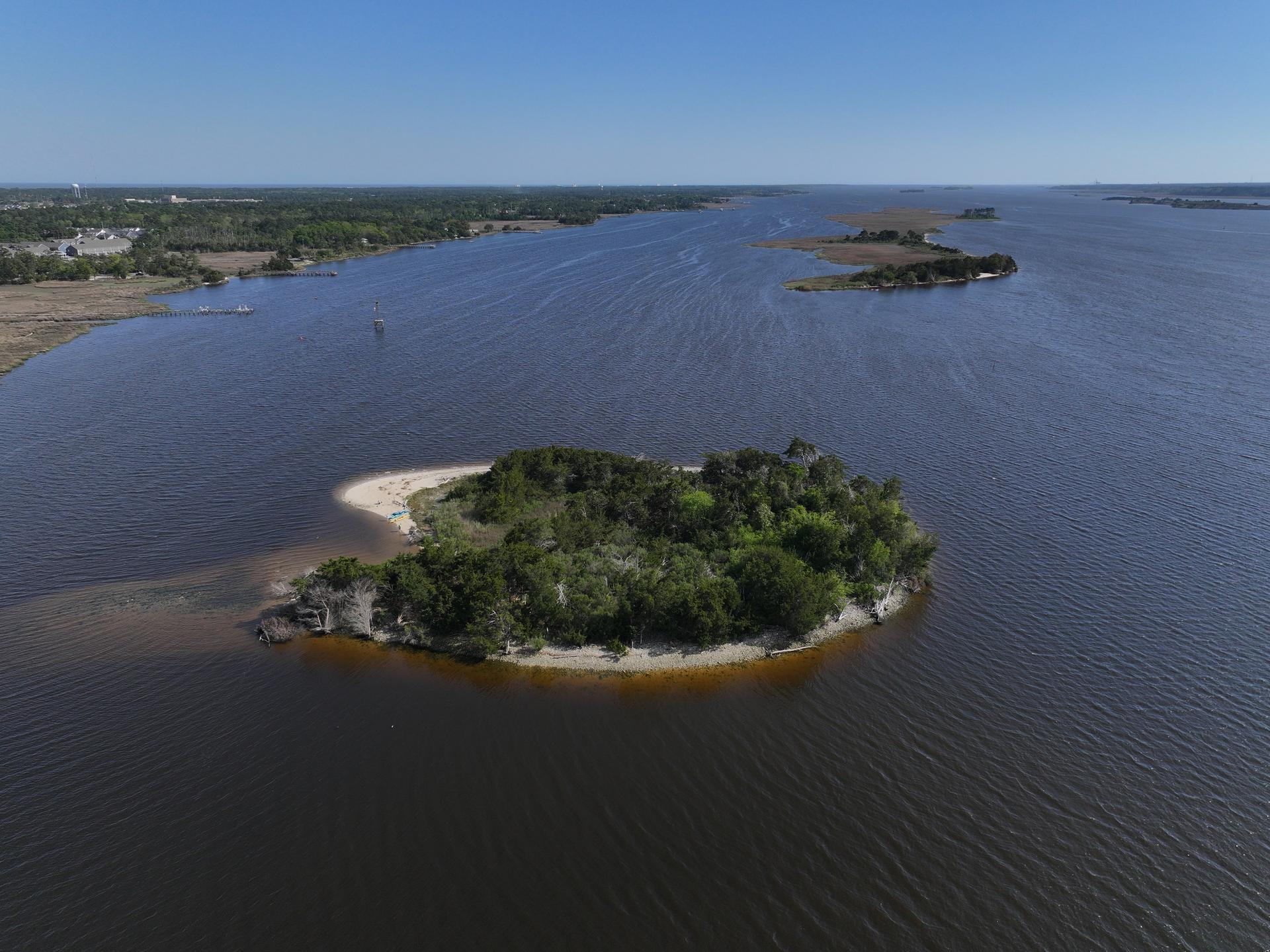
What You're Likely to Find.
Six species that surface regularly on Shark Tooth Island — from the common to the apex.
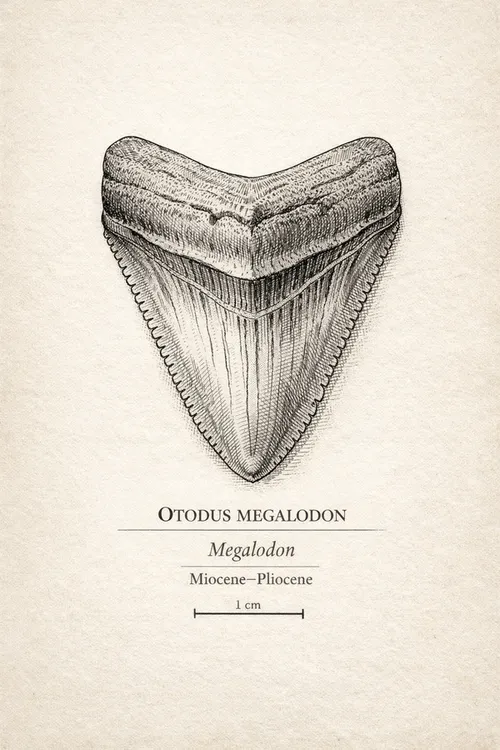
Megalodon
Otodus megalodon
Epoch
Miocene–Pliocene
Tooth Size
25–175 mm
Massive triangular blade with a distinct bourlette and fine serrations. The island's signature find — most are juveniles under 60mm, but adults over 100mm surface occasionally.
Size a Tooth arrow_forward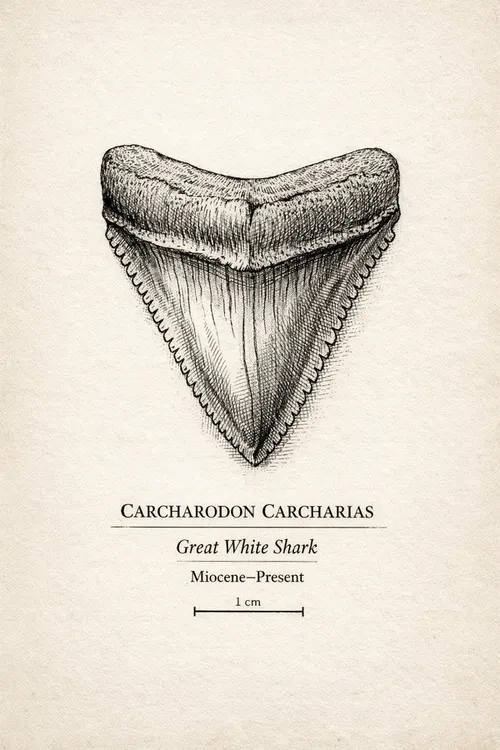
Great White
Carcharodon carcharias
Epoch
Pliocene–Recent
Tooth Size
30–65 mm
Coarsely serrated margins and no bourlette. Found in the upper layers and often confused with a small megalodon at first glance.
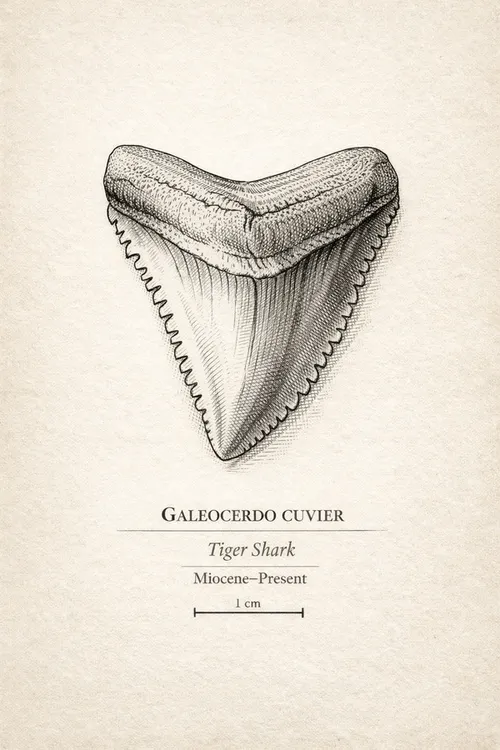
Tiger Shark
Galeocerdo cuvier
Epoch
Miocene–Recent
Tooth Size
20–40 mm
Unmistakable hooked, notched profile with secondary serrations. A shearing tooth built for turtles and large prey.
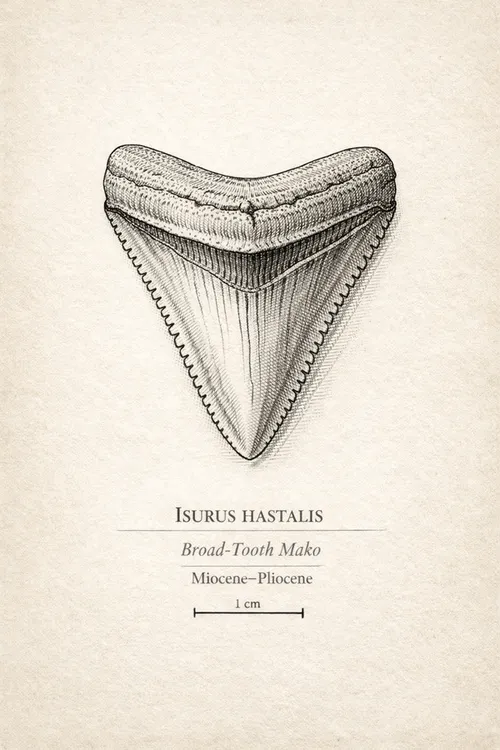
Broad-Tooth Mako
Cosmopolitodus hastalis
Epoch
Miocene–Pliocene
Tooth Size
40–75 mm
Broad, smooth-edged blade with no serrations. Widely regarded as the transitional ancestor of the modern great white.
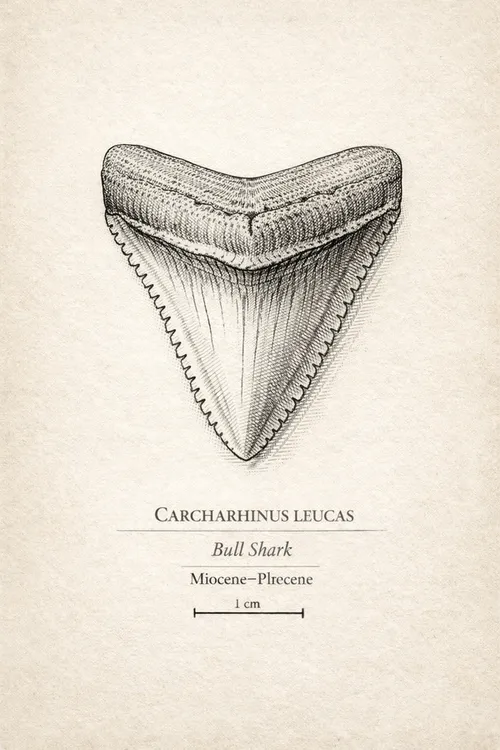
Bull Shark
Carcharhinus leucas
Epoch
Pliocene–Recent
Tooth Size
15–25 mm
Broadly triangular with heavy serrations. Easy to confuse with dusky and sandbar shark teeth — check the cusplets on the side.
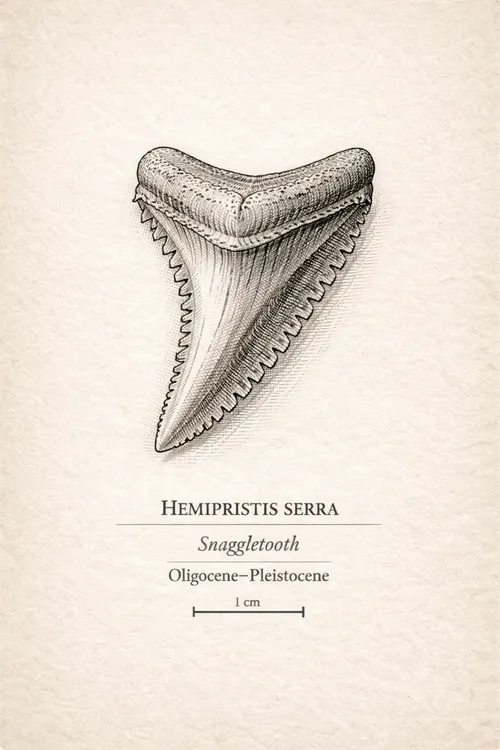
Snaggletooth
Hemipristis serra
Epoch
Miocene–Pliocene
Tooth Size
20–40 mm
Curved blade with large, distinctive coarse serrations. The most-wanted trophy tooth after megalodon. Teeth grow larger but rarer into the Pliocene.
The Island, Right Now
Real NOAA predictions for NOAA Station 8658715 (Federal Point) · Cape Fear River · Updates every 10 minutes
Top Questions.
A quick primer. See the full FAQ for all ten questions and expanded context.