How to Visit
Shark Tooth Island.
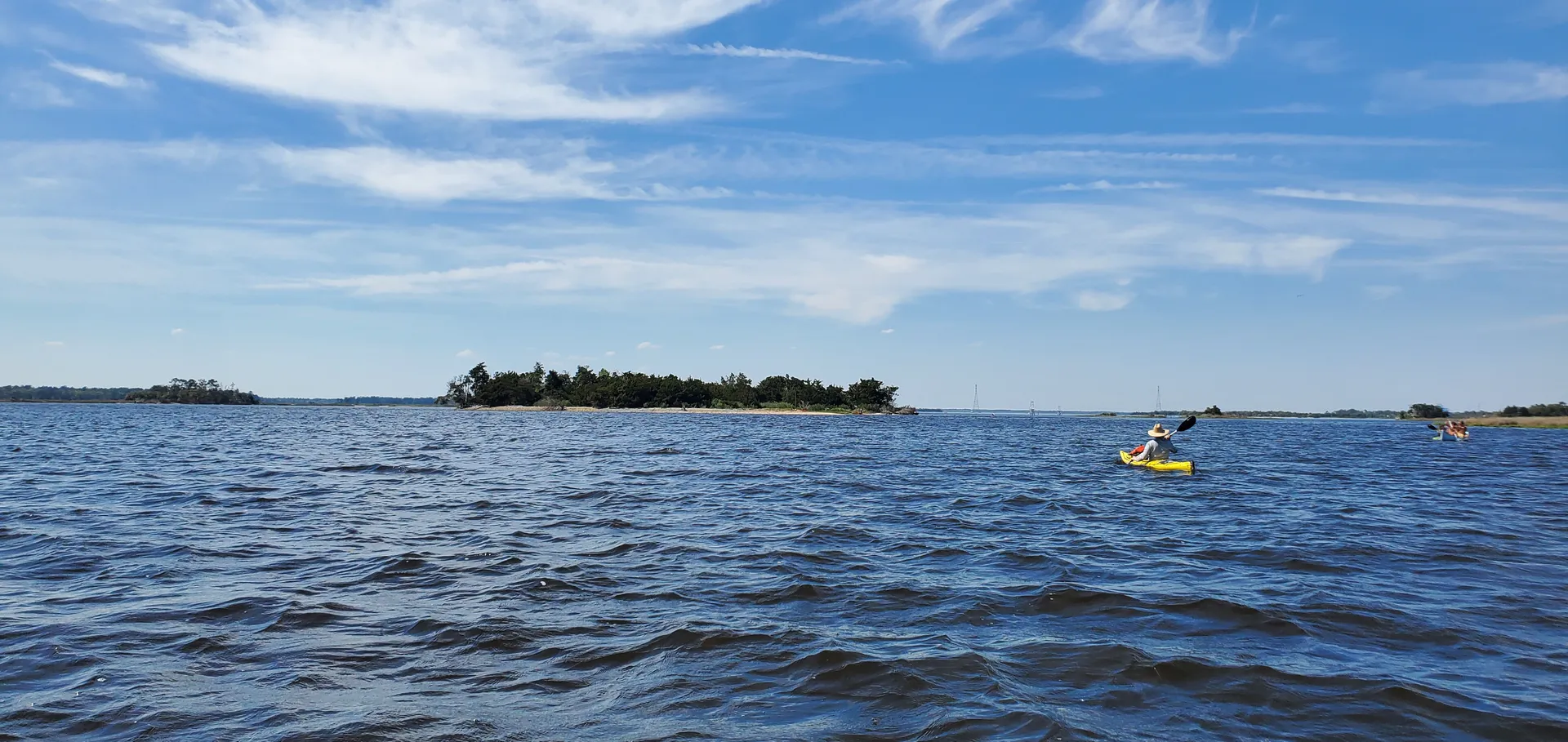
There's no bridge, no ferry, no launch from the island itself. You need a boat or kayak. The experience rewards preparation — the right tide, the right gear, enough time to actually hunt.
The river is working water, not a swim beach.
The lower Cape Fear is a federally-maintained shipping channel with strong tidal currents, commercial traffic, and turbid water you can't see through. It is not a place to swim, and it doesn't forgive a casual paddle. Plan the trip, not just the hunt.
- —Wear a PFD. NC law requires one per person; kids under 13 must wear one underway.
- —Don't swim the channel. Currents and boat traffic are unforgiving.
- —Watch for ship wake. Give the channel distance; brace when wakes hit.
- —Leave a float plan. Tell someone your launch, route, and ETA back.
- —Cold-water months (Nov–Apr): dress for the water, not the air.
- —Emergency: 911 · USCG Sector NC 910-343-3882
Access, Gear, Technique, Stewardship.
Access
- —Boat or kayak only — no land access from shore
- —River Road Park is the most common launch point
- —Short paddle from the park to the island cluster
- —Schedule your launch around low tide, not convenience
- —Allow 3–4 hours minimum for a real hunt
- —Check Cape Fear River tide tables, not beach tables
- —Mind ship wake — the federally-maintained shipping channel runs alongside. Container ships to Port of Wilmington throw serious wakes; give the channel distance and don't linger near the markers
- —Terrain is soft and sharp — dredge-spoil sediment is a mix of oyster shell, silt, and limestone. Expect soft mud in interior pockets and sharp shell at the waterline
- —Guided electric boat expeditions to the island are operated by Mozy Outdoors out of Carolina Beach
What to Bring
- —Water shoes or old sneakers — the sediment is rough
- —A mesh strainer or sifter (old colander works)
- —Bug spray — shade is available in the island interior but bugs can be worse there
- —A small dry bag for your phone and finds
- —More water than you think you need
How to Search
- —Work the waterline at low tide — fossils concentrate there
- —Scoop sediment and sift rather than surface scanning
- —Look for the triangular silhouette and flat, smooth surface
- —Black is the color — ignore brown, tan, or white fragments
- —Dense and heavy is a good sign; shell is light
- —Explore the other islands in the cluster — Keg Island too
Leave It Right
- —Pack out everything you bring in
- —Verify before collecting at scale
- —Respect the wildlife — fiddler crabs, shorebirds, and gators are present
- —Leave it better than you found it
Know Before You Go
Personal fossil collecting is generally permitted on dredge spoil islands. Vertebrate fossils and commercial collection are governed by the Paleontological Resources Preservation Act. For site-specific guidance, check with the NC Division of Coastal Management or the Wilmington District Army Corps of Engineers. When in doubt — photograph it, note the location, leave it in place.
Continue Exploring