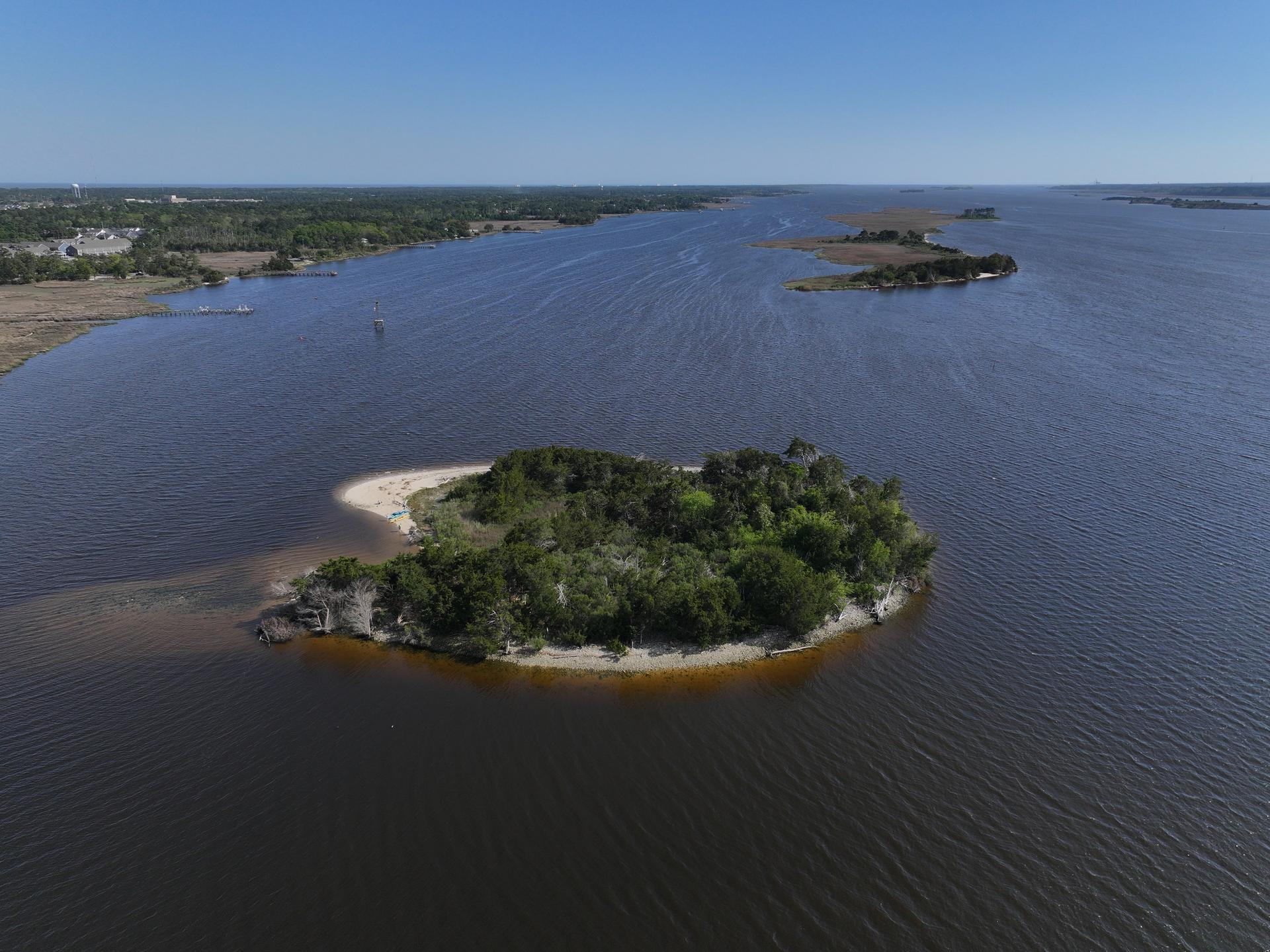
Shark Tooth Island is a small, water-access island in the lower Cape Fear River near Wilmington, North Carolina. It sits in a tidal stretch of the river just west of the city, part of a cluster of low, sandy islands that people have been hunting fossils on for decades.
What makes it worth visiting is simple. The teeth actually show up. At low tide you can walk exposed shoreline and find fossilized shark teeth in publicly accessible shell beds and sediment — megalodon, great white, tiger, bull, mako, and others.
What makes it worth understanding is that the place is stranger than it looks.
The fossils are ancient.
The island is newer.
Shark Tooth Island is part of a chain of dredge spoil islands tied to the Cape Fear River's navigation history. The teeth washing up are millions of years old — but the landform you're standing on is comparatively modern.
The short version: material dredged from the Cape Fear shipping channel was placed in nearby disposal areas, reshaping the lower river and forming a series of spoil islands. Shark Tooth Island is associated with that story. Older fossil-bearing sediments got brought up and redeposited in a place you can actually paddle to.
That's a different kind of fossil site than most. It's part natural, part engineered, and still part working estuary. Read the full history.
The sediments around the island include Miocene and Pliocene material — roughly 5 to 20+ million years old. In that time, warm, shallow seas covered what is now coastal North Carolina, and big sharks lived in them. When they shed or lost teeth, those teeth settled into the mud. The teeth preserve well because enamel is hard and mineralizes cleanly over deep time.
Dredging brought a lot of that older material up and moved it. Tides and currents then did what they always do — sorted the material, concentrating the heavy stuff (including fossil teeth) at the waterline and in specific pockets along the shoreline.
That's why a visit rewards timing and patience. You're not searching a random beach. You're reading a tidal sorting machine.
People who want a real experience with fossil hunting, not a theme-park version of it. The island rewards people who know how to read a shoreline, or who are willing to learn. First-timers can have a great trip — many do — but the best days happen when you've planned around the tide and given yourself enough time.
It's also worth visiting if you're curious about coastal North Carolina more broadly. The island is a window into how the Cape Fear River has been shaped by navigation, commerce, and tidal forces for a century and a half. The fossils are a bonus.
What it is not: a kid-friendly scavenger hunt with guaranteed results, or a place you can walk to from a parking lot. Plan accordingly.